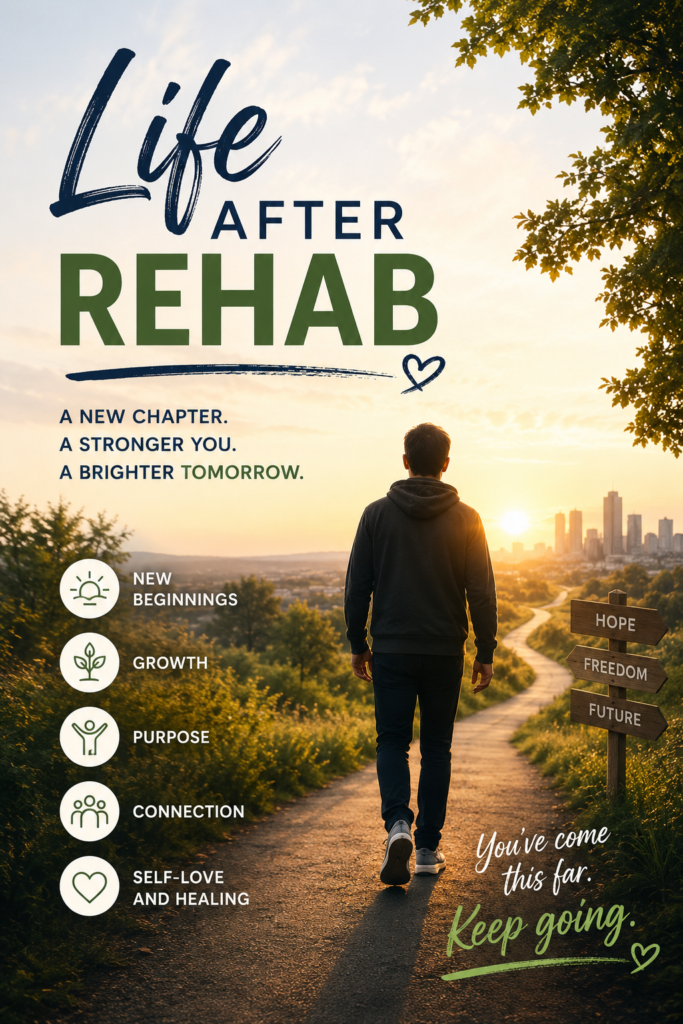
Life After Rehab: Your Roadmap
to a New Beginning
Recovery
doesn’t end when you walk out of rehab. In many ways, it’s just getting
started.
Introduction
Leaving a
rehabilitation centre is a moment of tremendous courage. You’ve done the
hardest part, admitting you needed help, and doing something about it. But
stepping back into everyday life in India comes with its own set of challenges:
family expectations, social judgment, career gaps, and the quiet pressure of
having to rebuild.
This guide
is for you. It won’t sugarcoat the difficulties. But it will give you honest,
practical tools to navigate stigma, restart your career, continue your
education, and build a life that is genuinely yours.
Part 1: Dealing with Stigmas — Because They’re Real,
and You Can Handle Them
In an ideal
world, substance use and mental health struggles would be understood as the
medical conditions they are. In practice, Indian society still has a long way
to go. Words like Nashedi, Bevada, Gardula, or Darudiya, Ganjedi
carry shame, not understanding. The media often portrays people with addiction
as criminals or failures. Religious communities may equate struggle with moral
failure.
Understanding
this environment is the first step to navigating it without internalizing it.
Family: The Complicated Love
Your family
cares about you. But they’ve also been through something. Financial stress,
emotional exhaustion, and sometimes real trauma. These are the things that
drive the phone-checking, the questions about your whereabouts, the anxiety
about every transaction.
How to work
through it:
- Acknowledge their fear openly.
Say: “I know what I put you through. I understand why you’re
worried.” - Build transparency voluntarily, share your live location, opt for digital payments over cash, check in
regularly. These aren’t compromises; they’re trust-building tools. - Set healthy limits, gently.
Explain that constant questioning, while well-meaning, can actually hinder
recovery by feeding anxiety and self-doubt. - Talk about your triggers. Let
your family know what helps and what doesn’t. Invite them into your
recovery goals.
Social Life: Who Belongs in Your Circle Now
Not all
friendships survive rehab. Some of your old connections existed entirely around
substance use, shared escapism, not genuine care. That’s not a judgment. It’s
just a fact that’s important to recognise.
Some people
will gossip. Some won’t know what to say and will say the wrong thing. Others
will surprise you with quiet loyalty.
The path
forward:
- Step away from environments and
people that don’t respect your journey. - Build new connections at
networking events, fitness groups, art clubs, skill workshops, or
volunteering spaces. - Do not engage with negative
self-talk. It is one of the most dangerous forces in recovery. When your
inner critic gets loud, treat it like external noise, acknowledge it, then
set it aside.
Part 2: Things Worth Knowing Before You Re-enter the
Workforce
Time away
from work creates knowledge gaps. Here’s what to prioritise before jumping back
in:
The AI Shift
Artificial
intelligence has fundamentally changed how industries work: writing, coding,
design, customer service, research. It’s not just ChatGPT. Mastering even the
basics of AI tools can make you significantly more competitive. Many free and
affordable webinars and short courses exist online.
Stay Current in Your Field
Whether it’s
new developments in your industry’s technology, policy changes, or shifting
market trends. Take a few weeks to research and catch up. This applies whether
you’re in medicine, finance, engineering, the arts, or any other domain.
Online Certifications
Platforms
like Coursera, Swayam NPTEL, and edX offer professional
certificates that are genuinely recognised. These can fill the gap on your
resume and signal that you’ve been actively growing, even during difficult
times. Distance learning programmes through IGNOU, Mumbai University,
and Yashwantrao Chavan Maharashtra Open University (YCMOU) offer more
formal credentials for those looking to complete or upgrade degrees.
Part 3: Continuing Your Education
Education
isn’t just about credentials. In recovery, it also provides structure,
community, purpose, and new environments where people don’t know your history.
10th and 12th Boards
If you were
unable to complete school, NIOS (National Institute of Open Schooling)
and BOSSE offer flexible open-schooling pathways that can be pursued at
your own pace.
Bachelor’s Degree
If you were
enrolled before rehab, you can often return to your college or transfer
credits. If you want a fresh start, open universities like IGNOU, Mumbai
University, and others offer distance programmes with intakes in June/July
and December/January. Studying abroad is also possible, though expensive, and
worth discussing with your family if it interests you. Preparation for the SAT
and portfolio-building would be the starting point.
Competitive Exam Preparation
Preparing
for exams like CAT (MBA), UPSC (civil services), or state-level
competitive exams can be a powerful tool in early recovery, not just for the
career doors they open, but for the discipline they require. Hours of
structured study, problem-solving, and delayed gratification are all genuinely
therapeutic habits.
Master’s Degree
A master’s
programme whether in India or abroad is an excellent way to pivot to a new
field, meet new people, and signal a new chapter professionally. Entrance
preparation for exams like IELTS, TOEFL, GRE, or GMAT
typically takes 3–6 months. Most foreign university application cycles open in
June and January.
One
important note: several countries carry far less social stigma around mental
health and addiction than India. A master’s or PhD abroad can genuinely mean
starting fresh, in a more accepting environment.
PhD — Full-Time Research
A PhD is a
serious commitment, but it comes with financial support through PMRF (Prime
Minister’s Research Fellowship), which can provide good stipends for
eligible Indian scholars. It structures your time completely, places you in an
intellectual community, and can open doors to high-paying research and academic
careers.
Part 4: The Job Route: Getting Back to Work
This is
daunting. The job market is competitive, and you may be carrying anxiety about
how to explain your absence. Let’s address it directly.
Your Resume
- Make sure it is polished and
has been reviewed by more than one professional. - Add recent certifications, even
if you completed them during or after rehab. - A LinkedIn profile is no longer
optional: it’s a primary channel through which hiring happens.
Where to Apply
- LinkedIn, Naukri.com, and Indeed.com
are your main platforms. - NGOs and social organisations actively welcome people with
lived experience of adversity. Your perspective is an asset here, not a
liability. - Government jobs offer stability, structured
environments, and less interpersonal politics. Keep an eye on official
government recruitment portals.
How Many Jobs to Apply For
Apply to 5–10
positions per day. Consistently. The modern hiring pipeline means many
resumes never reach a human reader before being filtered. Volume, combined with
quality, is the strategy.
The Gap Question in Interviews
You will
likely be asked about your career gap. You are not obligated to disclose your
medical history. A dignified, honest, and effective response:
“I took
time away for personal health reasons. I used that period to focus on recovery
and rebuild stability, and I’m now in a strong place and fully ready to return
to work.”
If an
interviewer presses disrespectfully, that tells you something important about
the culture you’d be entering. It’s useful information.
Once You’re In
Don’t try to
prove yourself all at once. The real credibility comes from consistency: showing
up on time, delivering what you promise, managing your emotions professionally,
and building a reliable routine. Small actions compound. Let them.
If
colleagues try to suggest you haven’t changed, or use your past against you: do
not engage. That is their noise, not your reality.
Part 5: Starting Your Own Business
Entrepreneurship
is the dream for many. Being your own boss, building something from nothing, it’s
an appealing vision, and it’s possible.
But it comes
with a warning that’s worth taking seriously: running a business is
stressful in ways a regular job is not. Financial uncertainty, long hours,
and constant decision-making can be real risks for someone in recovery. This
doesn’t mean don’t do it. It means do it with eyes open and a plan.
Before You Leap
- Earn the trust of your family
first. If they’re skeptical, respect that. Start with a low-risk venture
like consulting, tutoring, freelancing, to demonstrate that you can
operate professionally. - Treat a few months of regular
employment as a foundation, not a detour. It builds confidence, routine,
and credibility.
When You’re Ready
- Attend business networking
events, workshops, and startup conferences to find collaborators and
co-founders. - Explore incubators and angel
investors if you have a scalable idea. - Join a business networking
groups in India, groups or local startup communities are good starting
points.
The Non-Negotiable Priority
Your
recovery and your family’s wellbeing come first. Always. A business setback is
recoverable. Relapse is a far steeper climb. Structure your business journey
around protecting your mental health, not sacrificing it.
A Final Word
Recovery is
not a single event. It’s a direction. Every day you choose that direction
through the choices you make about your environment, your learnings, your work,
and your relationships.
You’re not
starting from zero. You’re starting from experience.